
When it comes to equipping schools, universities, or labs with telescopes in Sri Lanka, the choice often narrows down to two main categories: refractors and reflectors. Both designs have their strengths, and the right decision depends on budget, curriculum goals, and the type of observations educators want to encourage. At ColperLab, we see institutions balancing these factors every day, searching for instruments that blend durability with teaching value.
Table of Contents
Understanding the Core Difference: refractor vs reflector telescope
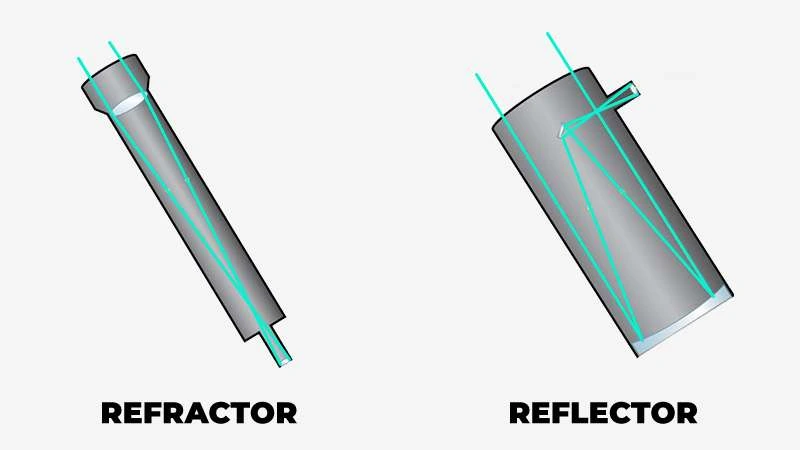
At first glance, a telescope may appear to be just a tube with an eyepiece. Yet the underlying design determines not only what students will see but also how often the instrument will need care and adjustment.
Refractor telescopes use lenses to bend and focus light.
Reflector telescopes rely on mirrors to collect and direct light to the eyepiece.
This distinction might sound small, but it influences the overall experience: Refractors excel in delivering crisp, high-contrast views of bright celestial objects such as the Moon, Jupiter, and Saturn.
Reflectors are the champions of deep-sky observation, pulling in faint galaxies, nebulae, and clusters that would otherwise remain invisible.
When paired with proper mounting and alignment, both designs can provide consistent results for student projects. This makes them equally viable in structured classroom environments, provided their limitations are well understood.
If you’re exploring what reflectors show best, dive deeper with Explore sky objects with reflector telescopes.
Why Refractors Appeal to Educators: refractor vs reflector telescope in practice
For institutions introducing students to observational astronomy, refractors often feel like the natural first choice. Their sealed tubes and durable build ensure that maintenance is minimal, while their straightforward design keeps frustration to a minimum.
Core strengths of refractors in education:
Ease of Use – Point, focus, and observe. Little else is needed.
Durability – Their construction means they can withstand frequent handling.
Sharp Imaging – Perfect for showcasing details of the lunar surface or planetary rings.
In practice, these qualities mean refractors can be set up quickly during a class session without lengthy adjustments. For younger students or beginners, this ease removes barriers and keeps the focus on discovery rather than troubleshooting.
What makes refractors versatile is that they are not confined to astronomy alone. Smaller models can be used indoors or for terrestrial observations, making them suitable for physics demonstrations or geography projects where magnified viewing adds depth to learning.
Reflectors and Their Advantages in Curriculum: refractor vs reflector telescope considerations
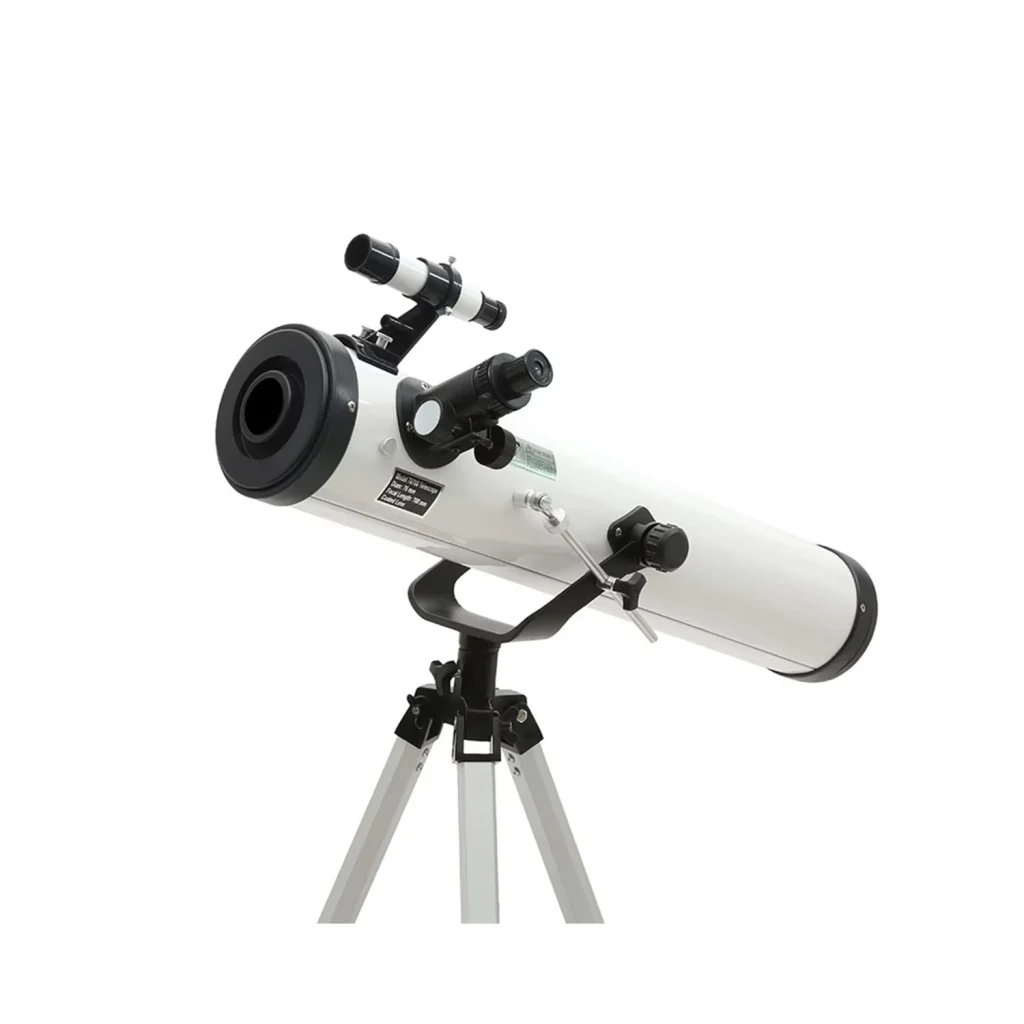
If refractors are about simplicity, reflectors are about power and value. They deliver far more aperture for the cost, allowing entire classes to explore faint celestial phenomena without exceeding institutional budgets.
Imagine a school trying to equip multiple labs: a 6-inch reflector can offer views of galaxies and nebulae at a fraction of the cost of a refractor with similar light-gathering capacity. That means more instruments in more classrooms.
Why reflectors work well in advanced learning environments:
Cost Efficiency: A larger mirror provides greater light capture at a lower price point.
Rich Observations: Ideal for astronomy clubs or university-level astrophysics programs.
Scalability: Available in models from beginner Dobsonian scopes to research-grade designs.
Because they use mirrors rather than lenses, reflectors do require occasional collimation (alignment). While this may seem like extra work, the calibration process itself can become a learning opportunity, giving students valuable experience in handling scientific equipment. Many educators view this not as a drawback but as a chance to cultivate precision and problem-solving skills.
For a simple staff handout on when a reflector fits a lab, see reflector telescopes for school astronomy labs – a beginner’s guide.
Practical Factors Institutions Must Weigh
Beyond optics, the logistics of integrating telescopes into an educational program play a major role in decision-making. Choosing the wrong design for the environment can quickly turn a learning aid into a source of frustration.
Some practical comparisons:
Storage and space differ between designs. Refractors are slim and easy to store on lab shelves, while larger reflectors may need more dedicated space.
Maintenance is simpler for refractors, which mostly just need lens care. Reflectors require occasional mirror alignment and cleaning.
Cost-wise, reflectors offer larger apertures for less money, while small refractors remain budget-friendly for introductory use.
Learning goals also influence choice. Refractors suit quick planetary studies, whereas reflectors support deeper observational projects and technical skill-building.
Even something as fundamental as a stable mount can make or break the classroom experience. In fact, many institutions discover that upgrading to sturdier mounts reduces wear, prevents frustration, and extends the lifespan of their telescopes.
Encouraging Student Engagement Through Observations
Telescopes are not just instruments; they are bridges between theory and lived experience. A well-planned observation program can take what students read in textbooks and make it visible through the eyepiece.
Ways schools and universities can maximize engagement:
Observation Logs:
Students can record nightly or weekly logs, learning consistency, patience, and data collection methods.
Comparative Studies:
Projects like tracking the phases of the Moon or timing the motion of Jupiter’s moons provide entry points into concepts such as orbital mechanics and brightness variation.
Deep-Sky Projects:
Older or more advanced students may attempt measuring apparent magnitude or sketching nebulae, deepening both scientific and artistic appreciation.
Blending these activities into coursework encourages students to think critically about what they see. When students are trusted with setup and calibration, they build not only observational skills but also confidence in handling precision tools. This independence is transferable beyond astronomy, fostering readiness for fields like engineering, physics, or data analysis.
Making the Right Choice for Long-Term Value
When comparing refractors and reflectors, the real question isn’t which is better overall, but which is better for your institution’s specific needs.
For simplicity, durability, and quick access to planetary details, refractors remain unmatched.
For budget efficiency, large apertures, and deep-sky exploration, reflectors provide greater long-term value.
In fact, many schools find that a combination of both types creates the most balanced program. Refractors serve well in introductory labs or for younger students, while reflectors add depth for advanced projects and extracurricular astronomy groups.
At ColperLab, we’ve seen first-hand how thoughtful telescope selection transforms a lab into a hub of discovery. Instruments, when chosen carefully, do more than show distant worlds—they cultivate curiosity, inspire new generations of scientists, and remind students that the night sky is not abstract theory but a real, observable universe waiting for exploration.